After years chasing a proper swing, these Zach Allen lessons are exactly what I do now. Videos, key concepts, drill cheat sheets, and my personal takeaways — all in one place.
From Brad
I've taken lessons, read books, watched hundreds of swing videos. Nothing clicked the way Zach Allen's teaching did. The core unlock for me: it's not about holding lag — it's about how fast you release it. Everything else fell into place once I understood that. These five videos are the ones I come back to the most.
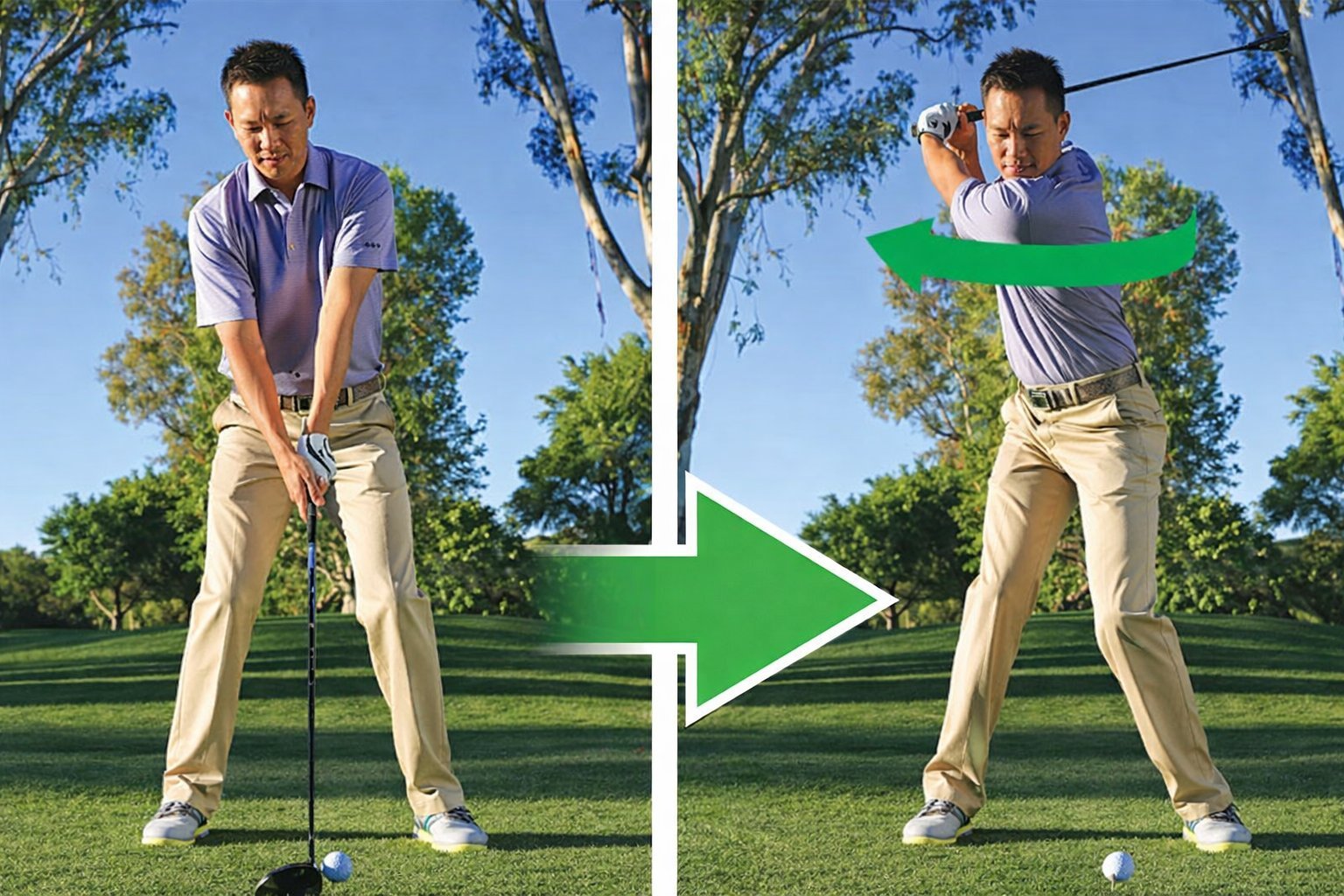
Zach Allen · Address & Follow-Through
Lesson 01 · Power & Release
She's 5'7", 135 lbs — and Drives It 303 Yards
Julia Lopez Ramirez · Aldrich Potgieter · The Flyby Release
Release speed > lag holdingBody hits the brakes168 mph ball speedWrist rehinge = power
Core Insight
Lag is created by releasing angles fast — not by holding them.
The secret isn't actively preserving the lag angle on the way down. The best ball-strikers create lag as a byproduct of how quickly they fire energy out to the club head. Julia Lopez Ramirez (5'7", 135 lbs, 303-yard average at the US Women's Open) and PGA Tour long-drive leader Aldrich Potgieter share one thing: they don't hold — they release explosively. The lower body starts the downswing, hits the brakes on the lead side, and the club whips past. Think Top Gun: hit the brakes, let the club fly right by.
Drill Cheat Sheet
Practice the "flyby" feel: body slows, club whips past
Focus on how fast you can rehinge after impact
Allow the club head to get back around the corner quickly
Use the white-ball toss drill — some throw-out is fine
Driver: positive angle of attack + right-to-left ball flight
Relax the arms — tension kills club head speed
Brad's Take
This was my biggest unlock. I spent years trying to hold lag and it literally slowed my swing down. Watching a 135-pound woman consistently hitting 168 mph ball speed while I'm grinding at 162 swinging all-out — with a shorter backswing and less effort — told me everything. The snap is the thing. Focus on the rehinge, not the hold.
Lesson 02 · Consistency
This One Move Takes You From Amateur to Elite Consistency
Trail shoulder = swing radiusLead arm bend is a symptomFix the root, not the resultConsistent radius = consistent contact
Core Insight
The chicken wing isn't the problem — it's the symptom.
Most amateurs chunk one shot and thin the next despite feeling like they made the same swing. The common thread: inconsistent swing radius. Most people blame the lead arm bending — the chicken wing — but that's the effect, not the cause. The root issue is the trail shoulder losing its connection through impact. When the trail shoulder stays connected and drives through correctly, the lead arm stays straight as a natural consequence — not something you have to force.
Drill Cheat Sheet
Stop actively trying to keep the lead arm straight
Focus on trail shoulder staying connected through impact
Trail shoulder drives down and through — not out
Consistent swing radius = same point of contact every time
Chunking or thinning alternately? Check trail shoulder depth
Video from face-on to see trail shoulder behavior
Brad's Take
I wasted so much bandwidth on "keep the left arm straight." When you fix the trail shoulder, the arm sorts itself. The thin-chunk alternation feels random — this explains why it's not random at all. Same root cause every time.
Lesson 03 · Path & Centrifugal Force
85% of Golfers Don't Understand This Principle
Centrifugal Force · Hands Close to the Body · Over the Top Explained
Over the top = scientific lawHands away from body = sliceCounteract centrifugal forceJack Nicklaus principle
Core Insight
You can't fight physics — but you can work with it.
Coming over the top isn't a technique problem, it's a physics problem. Centrifugal force naturally pulls the club away from the body — and if you don't counteract it, the club travels outside-in every time. Jack Nicklaus: you can never have your hands too close to your body as you swing. Byron Nelson said the same. Keep the hands deep and close, and the club tracks on the correct inside path automatically.
Drill Cheat Sheet
Divots going left (right-handed)? Path problem confirmed
Start downswing with hands staying close to the trail hip
Right elbow tracks down close to the body — not out away
Feel the hands staying "underneath" on the way down
Counter centrifugal force intentionally — it's always working against you
Goal: neutral path first, then draw
Brad's Take
The Nicklaus quote alone is worth the price of admission. "You can never have your hands too close to your body." Once I understood it was centrifugal force pulling the club out — not something I was consciously doing wrong — the fix became obvious. Stop fighting the swing and fight the force instead.
Lesson 04 · Compression
The "Hidden Enemy" Robbing You of Compression
Grip Pressure · Passive Trail Hand · One-Handed Drills
Grip pressure kills compressionRight hand overworks = flipLead-hand-only drillPassive trail hand = trap
Core Insight
Your hands and arms are overactive — and you don't know it.
Most golfers think compression is about angle of attack or shaft lean. The real hidden enemy is grip pressure and overactive hands. The trail hand pushing the club toward the ball is one of the most common swing killers — and most golfers can't feel it because it seems natural. Fix: the trail hand should stay passive and bent until the club naturally releases. One-handed drills expose which hand is misbehaving. Elite players practice both constantly.
Drill Cheat Sheet
Chip shots lead-hand only — feel the club trap the ball
Chip shots trail-hand only — is it pushing or passive?
Trail hand stays bent/cupped at impact — not pushing through
Let the club head naturally lag then release on its own
Grip pressure: 4 out of 10 — firm enough to control, loose enough to release
Flipping? Right hand is firing too early
Brad's Take
When Zach describes feeling how hard students' right hands are pushing — that was me. The one-handed chip drill was a revelation. When the right hand stays passive, the ball gets crushed with almost no effort. That sound when you trap it right is addictive.
Lesson 05 · Downswing
Master the Simplest Downswing Move in Golf
Trail Hip Drive · One Swing Thought · 0.25 Seconds
One move, not five0.25 sec top-to-impactTrail hip drives & pushesBody-first, arms follow
Core Insight
You have 0.25 seconds. One thought. Make it count.
The downswing takes approximately a quarter of a second from the top of the backswing to impact. There is no time to execute a checklist. The solution is one all-purpose, body-driven move: the trail hip drives and pushes off the ground. When this happens correctly, the arms shallow automatically, weight shifts automatically, hips open automatically. Every extra swing thought arrives late — or not at all.
Drill Cheat Sheet
One swing thought at the top: trail hip drives toward target
Feel the trail foot push and rotate into the ground
Don't try to pull arms down — let the hip move do it
Rehearse in slow motion before full swings
Early trail-hip fire = over the top — timing is everything
Sequence: lower body initiates, arms drop in slot, release
Brad's Take
The 0.25-second number is the most important thing in this video. I literally cannot execute four swing thoughts in a quarter second. Nobody can. When I simplified to "trail hip drives," everything else — the shallowing, the arm drop, the weight shift — just happened. This is the one that quieted the mental noise the most.